


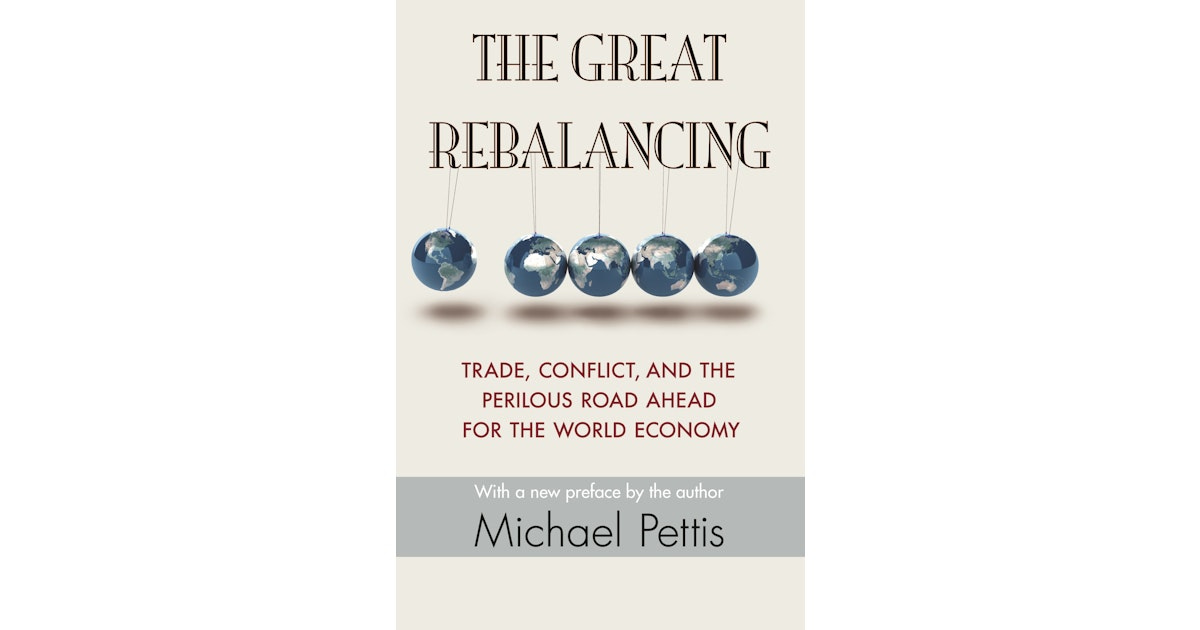
In his eye-opening book, The Great Rebalancing, Michael Pettis explains how trade and currency interventions never affect only one group of economic actors but rather stretch beyond borders in sometimes nuanced ways.
It’s a superb book: dense yet elegant. Almost poetic. Although it was written in 2013 it feels as relevant today as ever.
One of Pettis’ main points is that economies are more tightly bound than we assume: what initially might look like a measure that subsidizes the production of widgets in one country, for example, may end up driving a real estate boom in another.
To understand these shifts it’s necessary to understand that there are only ever three sources of demand in an economy: domestic consumption, domestic investment, and the trade surplus.
GDP = Consumption + Investment + Net Exports
In other words, resources that are produced in a country will either get consumed domestically, invested locally to produce more resources, or shipped out to satisfy foreign demand. By definition, those are the only three options.
At different moments, any one part of the equation can dominate and push the other parts to adjust, but how this happens is not always so clear. Because we have a tendency to moralize about which part is “good” or “bad” we often misinterpret the underlying mechanics.
“Confused moralizers love to praise high-savings countries (let us call them all “Germany”) for their hard work and thrift, and deride high-consuming countries (which we will call “Spain”) as lazy and too eager to spend more than they earn… [but] this is almost wholly nonsensical.”
His point here is that consumption rates are largely the consequence of trade or industrial policies, not so much of individual cultural preferences. After the adoption of the euro, for example, when countries with radically different compositions shared one currency and one ECB rate, policy became too tight for Germany and too loose for the periphery. The result was an undervalued euro for Germany—a significant price advantage for its exporters.
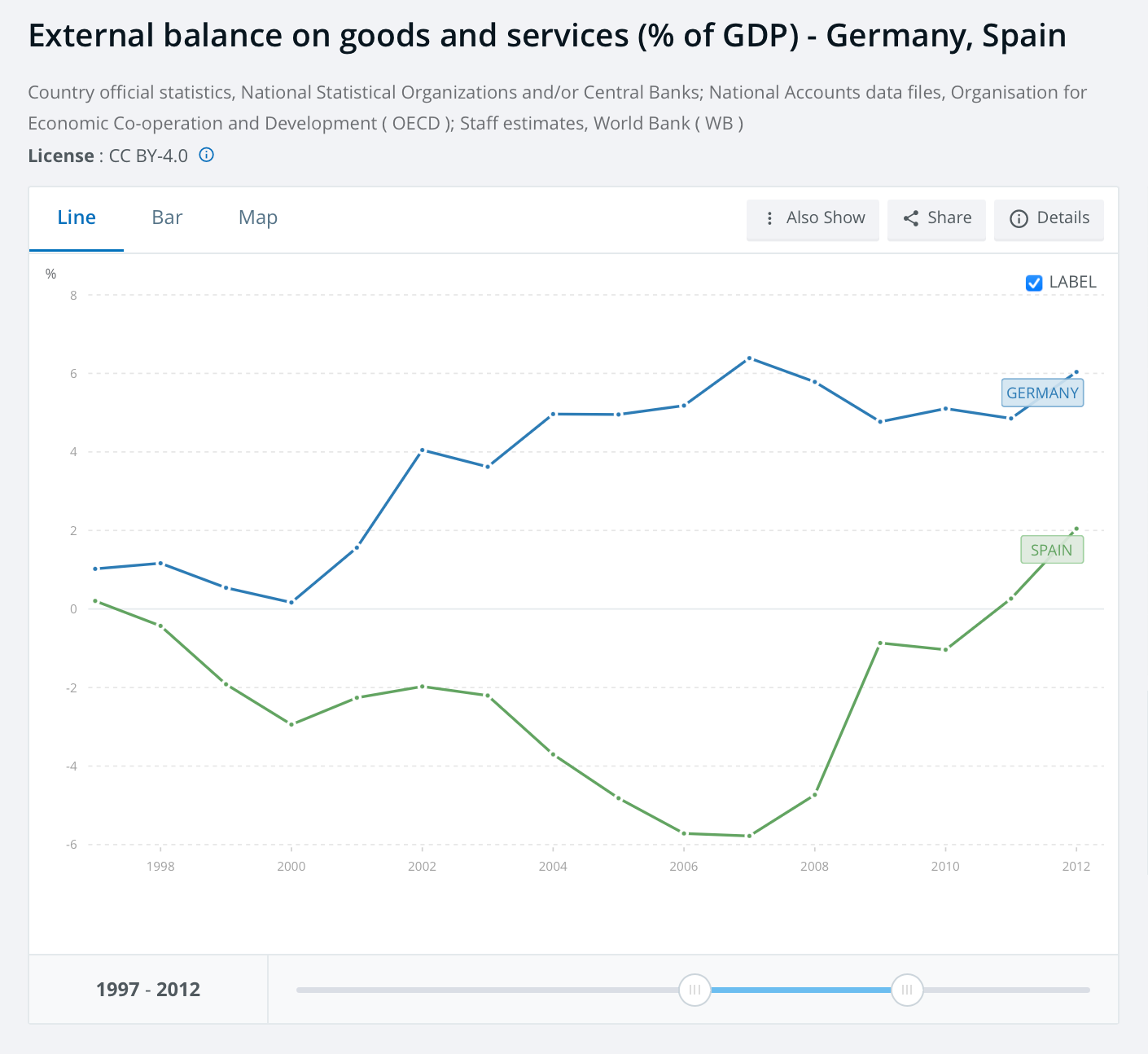
In other words, Germany’s trade surplus and Spain’s deficit had nothing to do with superior or inferior cultural norms and everything to do with trade and capital imbalances driven by policies that distorted their relationship.
He makes a similar argument with China and the United States. It’s definitely worth the read.
The main lesson we take from Pettis’ book is to always look beyond the narrative to the underlying mechanics. Today we might apply this same logic to the coverage surrounding the weakening of the dollar. Notice how several financial publications interpreted USD weakening after Liberation Day as follows:

Bloomberg: The Dollar Still Rules, But US Policy Is Making It Less Special
“Trump’s push to redesign the global economic order in favor of the US is shaking one of the foundations of its post-World War II supremacy: the dollar’s undisputed role as the world’s reserve currency… the haphazard rollout and rollback of Trump’s tariff campaign in April sparked a rare weakening…”
In the article, the author attempts to link the dollar’s weakness to a perceived loss of credibility. At first glance, this seems like a logical assumption to make: fear of policy uncertainty could weigh on the currency.
But this is not how trade works. Countries do not choose to hold dollars. They do so as a consequence of their trade imbalances with the US. China, for example, cannot decide from one day to the next to give up its dollar assets without rebalancing its whole economy away from exports.
And indeed, since Liberation day, the data show that there’s been no wholesale abandonment of the dollar. Firstly, trade itself seems relatively unaffected by the new tariff regime. The dip in Q1 shows a pull-forward in orders, which has since stabilized.1
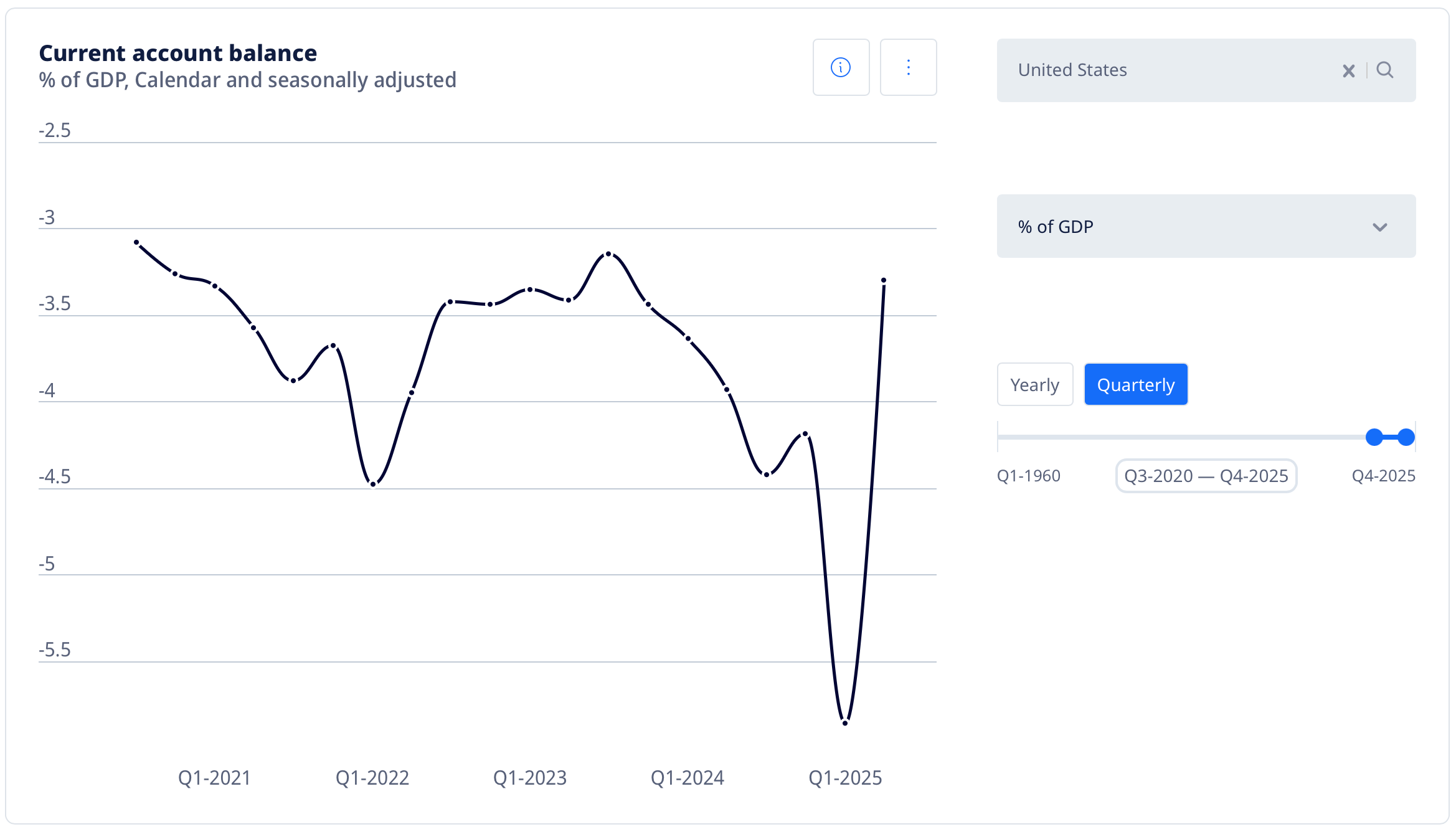
And if there’s been little change in trade, then that means there’s been little change in foreign dollar reserves, since countries must sell their goods to the US in dollars. Capital flows and trade flows must balance out.
According to the IMF, dollar reserves held by central banks throughout the world has been stable. Therefore, both these figures suggest that, despite Trump’s tariffs, the world still wants to hold as many dollars as ever before. There is no loss of credibility.
The dollar weakness can be attributed to FX movements driven in part by foreigners hedging their assets. But hedging is a trade: if you sell a dollar, someone else is buying it on the other side. The hedge just reassigns who bears the risk rather than eliminating dollars from the system.
This is one reason why we think this year’s dollar weakness was a short-term liquidity event, exacerbated by a narrative that felt both politicized and emotional (anti-Trump feeling among foreigners, maybe) and that may just prove to be temporary.
All materials produced by Reveles Research, LLC—whether posted on this site or distributed elsewhere—are supplied solely for information and education. Nothing herein constitutes, or should be construed as, investment, legal, or other professional advice. You should carry out your own analysis and due diligence before acting. Every investment decision ought to reflect your unique financial circumstances, objectives, and tolerance for risk.

Pettis’ theory fits this picture: tariffs don’t necessarily slash import volumes in the short run, he says; they mostly raise import prices, reducing real household income. They are effectively just a tax on consumers.